
Why Should You Experience Guided Historical Tours of Downtown Charlotte with Ole Tyne Medays?
Discovering the Authentic Layers of Charlotte's Urban Heritage Through Professional Guided Exploration
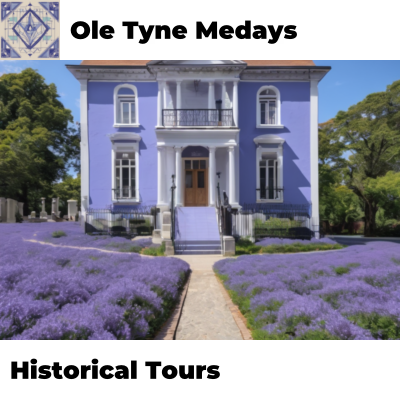
Charlotte's downtown district contains far more than meets the eye. Beneath the contemporary glass facades and modern infrastructure lies a complex tapestry of narratives spanning centuries. Most visitors and even longtime residents traverse these streets without understanding the significant historical events, architectural achievements, and cultural transformations that shaped the city into what it is today. This is where professional historical tour services become invaluable.
The difference between walking through downtown alone and experiencing it with a knowledgeable guide represents the distinction between seeing and truly understanding. When you traverse these blocks accompanied by an expert, you gain access to stories that textbooks often overlook. You learn why certain buildings were constructed in specific architectural styles, what motivated businesses to establish themselves in particular locations, and how ordinary citizens contributed to extraordinary historical moments.
Ole Tyne Medays specializes in precisely this kind of immersive historical experience. Their guided tours transform a simple stroll through downtown into an educational journey that connects present-day Charlotte to its multifaceted past.
The Value of Expert Historical Interpretation
Professional tour guides possess credentials and training that casual observers simply cannot replicate. These specialists have spent considerable time researching archives, conducting interviews with local historians, and verifying facts through multiple sources. When a guide points to a building and explains its construction date, architectural significance, and original purpose, that information carries weight derived from genuine scholarship.
Consider the difference between learning that a structure was built in 1887 versus understanding that this particular building survived two major fires, witnessed the city's transition from a trading post to an industrial hub, and now stands as one of the few remaining examples of Victorian commercial architecture in the Southeast. The latter explanation provides context that transforms a mere historical fact into a meaningful narrative.
How Guided Tours Reveal Hidden Connections
Downtown Charlotte contains numerous interconnected stories. A building on one corner connects to a family business two blocks away, which connects to a political movement that influenced city planning three decades ago. Professional guides understand these connections and weave them into cohesive narratives that help visitors comprehend how different elements of history interact and influence one another.
Exploring Charlotte's Commercial and Industrial Transformation
The Evolution from Trading Post to Modern Metropolis
Charlotte began as a modest trading settlement in the 1700s. The city earned its name from Queen Charlotte of Mecklenburg-Strelitz, wife of King George III. Early settlers recognized the strategic location as an ideal hub for commerce and regional trade. Archaeological evidence and historical documents reveal that indigenous peoples had utilized this location for centuries before European colonization, establishing it as a natural gathering place.
The early nineteenth century witnessed significant change. As cotton became increasingly important to the regional economy, Charlotte's role expanded dramatically. Merchants established warehouses and trading centers. The city became known for its role in the cotton trade, which brought wealth to certain segments of the population while establishing systems and structures that would have lasting consequences for generations to come.
The Rise of Industrial Infrastructure
During the mid-to-late 1800s, railroad expansion transformed Charlotte into a genuine urban center. The following developments occurred:
- Multiple railroad lines established terminals in downtown Charlotte
- Manufacturing facilities emerged to process cotton and other agricultural products
- Banking institutions grew to finance expanding commercial operations
- Textile mills began operations in surrounding areas, drawing workers to the city
- Construction of commercial buildings accelerated to accommodate growing business activity
These developments created a prosperous period, but they also established patterns of segregation, labor exploitation, and economic inequality that would shape the city's social dynamics for generations.
The Gold Rush Era and Its Architectural Legacy
Many visitors remain unaware that Charlotte sits in a region with significant gold deposits. The discovery of gold in North Carolina in 1799 preceded the famous California Gold Rush by decades. While the North Carolina gold rush never reached the scale of western rushes, it profoundly influenced Charlotte's early development and left architectural traces throughout downtown.
The United States Mint operated in Charlotte from 1835 to 1861, producing gold coins. This institution brought federal attention and investment to the city. The building that housed the mint still stands, though many contemporary passersby never recognize its historical significance.
Tour guides explain how this period influenced:
- The establishment of banking and financial institutions
- The development of security infrastructure and practices
- The attraction of skilled craftsmen and laborers
- The creation of wealth that funded other development projects
- The establishment of Charlotte as a regional financial center
Understanding this chapter of history provides essential context for comprehending why certain downtown locations developed as they did.
Understanding Charlotte's Crucial Role During the American Civil War and Reconstruction Era
Strategic Significance During Wartime
The American Civil War devastated much of the South, yet Charlotte's experience differed in certain respects from other southern cities. Confederate military leaders recognized the city's transportation infrastructure, particularly its railroad connections, as strategically valuable. However, Charlotte was never the site of major battles. Instead, it served as a supply hub and administrative center for Confederate operations in the region.
This reality shaped the war's impact on Charlotte in complex ways. While the city avoided the physical devastation that Sherman's marches inflicted on Atlanta, Columbia, and other southern cities, it experienced severe economic disruption. Railroads were heavily used for military purposes, limiting commercial traffic. Young men from Charlotte served in the Confederate army, and many did not return.
The Physical and Social Aftermath
Following the war's conclusion, Charlotte faced the enormous challenge of reconstruction. The economy required rebuilding. Social structures needed reorganization under new constitutional and legal frameworks. The city's population included formerly enslaved people who were now navigating freedom, alongside white residents who had lost economic and political power.
The downtown landscape reflects this period's complexity. Some buildings date from the immediate post-war period and represent attempts to demonstrate confidence and progress. Others show signs of damage or modification that reflects the era's upheaval.
Architectural Changes and Urban Planning Decisions
Professional historical tours explore how reconstruction-era decisions influenced downtown's modern layout:
- Building styles shifted to reflect national trends rather than distinctly southern aesthetics
- Street patterns were modified to accommodate new transportation technologies
- Public spaces were redesigned to reflect new civic values and organizational structures
- Commercial districts were reorganized based on new economic realities
- Residential patterns shifted as formerly mixed neighborhoods became more segregated
Understanding these changes helps contemporary visitors comprehend why downtown Charlotte looks and feels the way it does today.
Narratives of Resilience and Struggle
The reconstruction era brings forth stories of individuals and communities navigating tremendous uncertainty. Some families maintained prosperity through the transition. Others lost nearly everything. Free Black residents faced new legal restrictions as states implemented discriminatory laws. Poor white residents competed with formerly enslaved people for limited economic opportunities.
Guided tours present these complex narratives honestly. Rather than sanitizing history or presenting overly simplified accounts, professional guides acknowledge the era's genuine complications and contradictions. This approach helps visitors develop more nuanced understandings of historical processes.
Recognizing Architectural Styles and Building Techniques Throughout Downtown
Victorian and Romanesque Revival Influences
Downtown Charlotte contains numerous buildings constructed during the late nineteenth century, when Victorian and Romanesque Revival architectural styles dominated American commercial construction. These structures display distinctive characteristics that tell stories about their creators' values, technological capabilities, and aesthetic preferences.
Victorian commercial buildings typically feature:
- Ornamental brickwork with multiple colors and patterns
- Arched windows and doorways
- Decorative cornices and rooflines
- Multiple stories designed for mixed-use purposes (retail below, offices or residences above)
- Large window openings to maximize interior natural light
Romanesque Revival elements that appear on Charlotte buildings include:
- Rounded arches
- Heavy stone or masonry construction
- Towers or turrets
- Rough-faced stone exteriors
- Fortress-like appearances suggesting permanence and stability
A professional guide points out these architectural elements and explains their significance. The decorative cornices weren't merely ornamental—they demonstrated the building owner's success and encouraged customers to trust established businesses. The quality of brickwork and stonework indicated the resources invested in construction, suggesting financial stability and permanence.
Early Twentieth-Century Modern Commercial Architecture
As the twentieth century progressed, architectural styles evolved. Art Deco, Art Moderne, and eventually International Style influences appeared in Charlotte's downtown. These styles represented different values and technological possibilities compared to their Victorian predecessors.
Art Deco buildings feature:
- Geometric patterns and motifs
- Vertical emphasis creating the impression of height and progress
- Stylized natural forms
- Rich materials like marble and bronze
- Integration of new technologies and materials
These buildings communicated modernity, technological advancement, and forward-thinking business practices to contemporary observers.
Building Materials and Construction Techniques
Understanding construction materials provides insight into historical processes and challenges. Brick production, stone quarrying, and iron forging represented significant technical achievements. The presence of particular materials indicates trade routes, economic connections, and technological capabilities available at specific times.
A guide might explain that a building constructed in